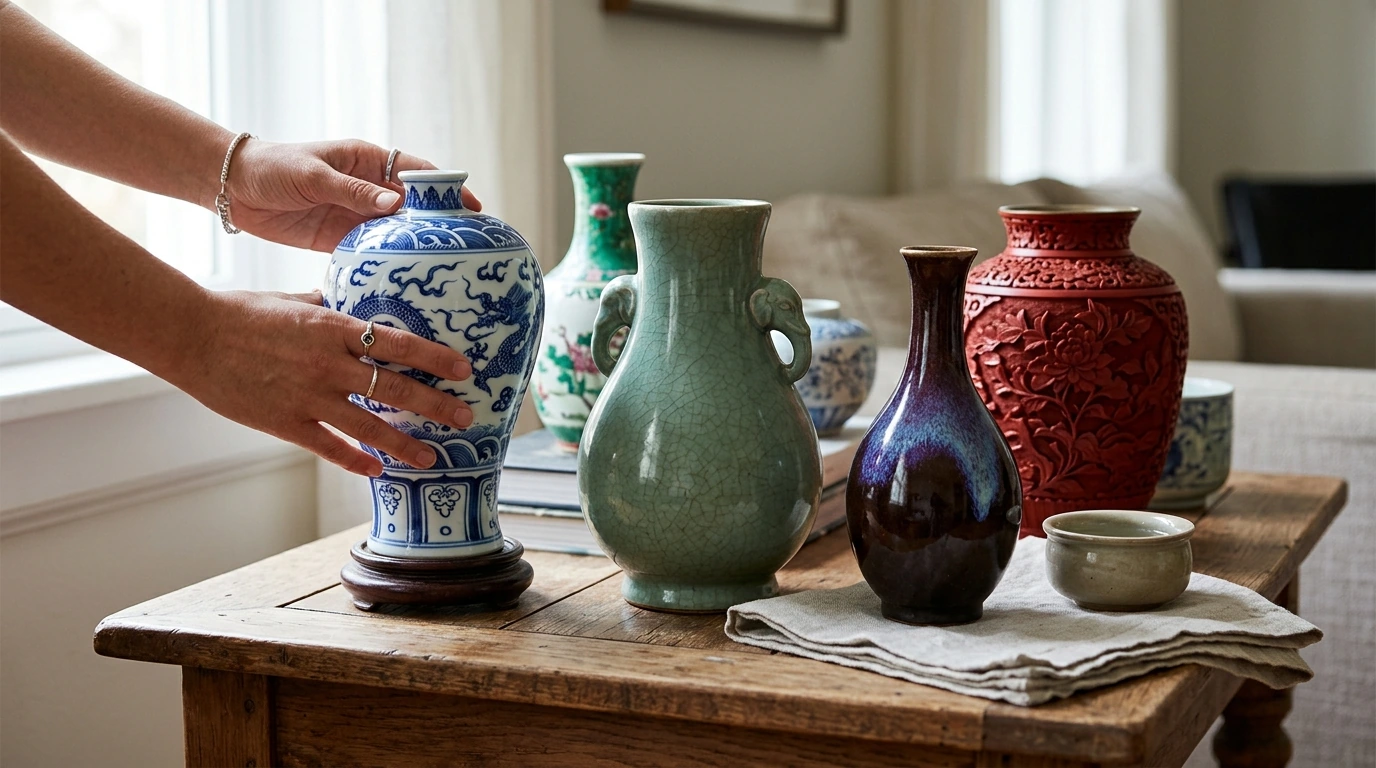
Chinese vases cover a wide range of shapes, glazes, and decoration styles, and knowing the main types helps you choose pieces that fit your space and your collecting goals. Our team groups Chinese vases in a few practical ways—by form, by surface finish, and by decorative tradition—so you can quickly identify what you’re drawn to and how it might display at home.
Many collectors begin with form. Common silhouettes include the meiping (plum vase) with rounded shoulders and a narrower neck, baluster vases with a confident, column-like profile, garlic-mouth vases with a bulbous neck and flared rim, and gourd (double-gourd) shapes that read well as a standalone accent. You’ll also see gu (beaker) vases with a flaring top and foot, plus ginger jars (technically lidded jars, often displayed like vases) for bold shelf styling.
Glaze families often signal the look you’ll get across a room. Celadon offers soft green tones and a calm, antique feel. Monochromes like sang-de-boeuf (oxblood red), peachbloom, and rich powder-blue create a statement with minimal pattern. Crackle glazes add fine veining that works beautifully in layered, vintage interiors. When you’re decorating, match glossy glazes with sleeker surfaces, and use matte or crackle finishes to warm up modern spaces.
Painted and enamelled traditions include blue-and-white (cobalt underglaze), famille rose (pink-forward enamels), famille verte (greens and iron-red accents), and wucai (multi-color palettes often paired with underglaze blue). You may also encounter cloisonné vases (enamel on metal with wire outlines) and carved or molded porcelain where relief work becomes the main design feature.
For practical styling ideas—pairing heights, choosing the right silhouette for shelves vs. consoles, and building cohesive vignettes—visit our guide: retro Chinese ceramic vase decor styling ideas.
Value often concentrates in vases with strong craftsmanship, desirable forms, and high-quality decoration, especially when condition is clean and restoration is minimal. Pieces tied to recognized periods, workshop traditions, or standout glaze results are also frequently sought after.
Start by checking overall condition, quality of painting or glaze, and whether the form and proportions look deliberate and refined. Marks can help, but a careful review of materials, wear patterns, and construction details is usually more informative than a mark alone.











Leave a comment