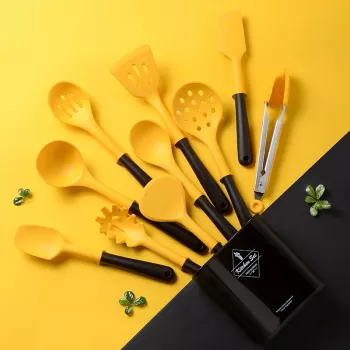
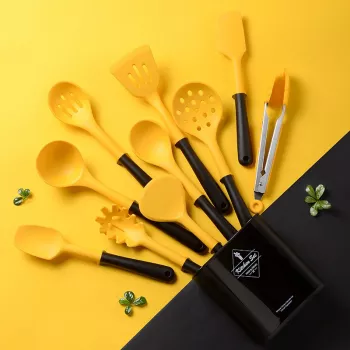
A well-picked utensil set makes cooking feel smoother: fewer scratches on cookware, less clatter in the drawer, and the right tool ready when a sauce thickens or a pancake needs flipping. Our team likes this 10-piece yellow silicone set as a simple way to refresh the basics with a cheerful pop of color while keeping day-to-day prep, stirring, serving, and scraping comfortably covered. For more guidance, see In-Depth Product Reviews: Silicone Spatulas, Turners, and Scrapers ….
What this 10-piece set brings to a kitchen routine
When you cook often, small frictions add up—scratched nonstick pans, missing tools, or utensils that just don’t work well with sticky foods. A coordinated silicone set helps you steady the everyday workflow. For further reading, see MIBOTE Silicone Cooking Kitchen Utensils Set, Wooden Handle, Teal.
- Silicone cooking heads help protect nonstick and coated cookware from the nicks and scrapes that can shorten pan life.
- A matched set reduces the “miscellaneous drawer” problem—core shapes are within reach for most recipes, from sautéing to baking.
- Bright yellow is easy to spot on a counter, in a utensil crock, or against a dark pan, which speeds up busy cooking moments.
- Silicone is a practical choice for sticky foods (think batter, eggs, glazes) because it can help release food more easily than some rigid materials.
- A single matched set is a fast reset after a move, a dorm/apartment setup, or an upgrade from worn, mismatched tools.
Where silicone utensils shine (especially with modern cookware)
Silicone tools are especially useful in kitchens built around coated cookware and one-pan meals. You get the control of a flexible edge without the sharpness of metal corners.
- Nonstick and ceramic-coated pans: silicone is generally gentle on coatings compared with metal edges.
- Sauces and custards: flexible edges can help sweep the bottom and corners of pots to reduce scorching and waste.
- Baking and mixing: silicone is handy for scraping bowls clean and folding ingredients without tearing delicate mixtures.
- Serving and plating: softer edges are less likely to chip or mark cookware and serving pieces during transfers.
- Meal prep: quick tasks—stirring, portioning, mixing—feel easier when tools are comfortable and consistent across a set.
A practical way to match utensils to the meals you cook
The easiest way to get value from a 10-piece set is to assign “go-to” roles for weeknights and keep the rest as backups or specialty options. That way, you’re not hunting mid-recipe.
- For stovetop cooking: keep a turner and a stirring utensil at the ready; reserve a scraper for the last sweep of sauces and scrambled eggs.
- For soups and stews: reach for a ladle-style tool (if included in the set) and a solid spoon for stirring from the bottom of the pot.
- For baking: use a flexible spatula to scrape batter and a spoon/spreader tool to portion and smooth.
- For high-mess recipes (caramel, marinades, sticky rice): silicone’s smoother surface can make cleanup easier when you wash soon after use.
- For batch cooking: having multiple pieces means one utensil can rest while another stays clean for tasting, serving, or finishing.
Common utensil shapes and the jobs they handle best
| Utensil type (typical in a 10-piece set) |
Best uses |
Quick tip for cleaner cooking |
| Flexible spatula/scraper |
Scraping bowls, folding, finishing sauces |
Sweep pot corners and bottom before serving to reduce leftovers stuck on |
| Turner/flipper |
Pancakes, burgers, roasted veg, fish fillets |
Slide under food fully before lifting to prevent tearing |
| Spoon or solid spoon |
Stirring grains, sautéing aromatics, serving |
Use the spoon edge to break up ground meat as it browns |
| Slotted spoon/turner (if included) |
Lifting foods from liquid or oil |
Pause above the pan for a second to drain before plating |
| Whisk (if included) |
Eggs, dressings, quick sauces |
Whisk near the pan edge to incorporate stuck-on bits into the sauce |
Care basics that keep silicone tools looking fresh
A little routine care keeps silicone feeling clean (not oily) and looking bright, especially with colorful utensils.
- Wash soon after use, especially after oily sauces, to prevent residue from lingering on the surface.
- Avoid prolonged direct contact with open flame or heating elements; use utensils for stirring and turning rather than resting on hot burners.
- For strong odors or stains (tomato, curry, garlic): soak in warm soapy water, then rinse thoroughly and air-dry.
- Let utensils dry fully before storing to keep drawers and crocks fresh.
- If tools ever feel tacky from buildup, a thorough wash and complete dry cycle typically helps; avoid harsh abrasives that can dull the finish.
Who this set is best for
A simple countertop setup that makes the set feel effortless
In-stock picks from our store
FAQ
Are silicone cooking utensils safe to use with food?
Food-grade silicone is widely used for kitchen tools intended for food contact. Use utensils as designed, avoid overheating or direct flame exposure, and replace any pieces that are cracked, gouged, or degrading.
Will silicone utensils scratch nonstick cookware?
Silicone is generally considered gentle on nonstick coatings compared with metal utensils. To minimize wear, avoid scraping with excessive force and keep cookware clean so trapped grit doesn’t act like an abrasive.
How do you remove smells or stains from silicone utensils?
Soak the utensil in warm, soapy water, then rinse well and air-dry fully. For stubborn odors or stains, a baking soda paste and an extra wash can help, especially if you clean soon after cooking pungent foods.
Recommended for you










Leave a comment