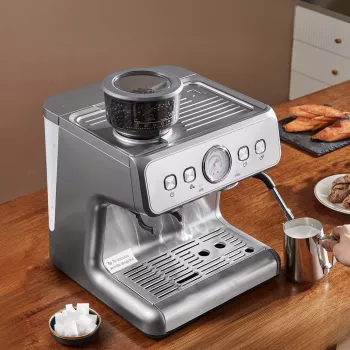
A home espresso bar works best when the essentials are built in: consistent pressure, fresh grinding, and milk texturing on demand. This 15-bar semi-automatic espresso coffee maker brings those pieces together in one footprint, so daily cappuccinos, lattes, and straight shots feel more repeatable—without losing the hands-on control that makes espresso rewarding.
What this espresso setup is designed to do
- Deliver café-style espresso at home with a semi-automatic workflow: grind, dose, brew, steam.
- Support both straight espresso and milk-based drinks with an integrated milk frother.
- Cut down countertop clutter by combining espresso brewing and a built-in grinder.
- Keep results consistent by building a repeatable routine around grind size, dose, and extraction time.
Who it fits best (and who should pass)
Great fit for
- Home coffee drinkers upgrading from pods, drip, or pre-ground espresso—especially if you want better aroma and body.
- Households that make lattes and cappuccinos and don’t want a separate grinder and steamer taking up space.
- Learners who want control over grind and shot timing but aren’t looking for a fully manual lever workflow.
Less ideal for
- Anyone who wants fully automatic, one-touch drinks with no dialing-in or routine adjustments.
- If you never make milk drinks and only pull the occasional shot, a simpler setup may suit you better.
- Minimalists who prefer a separate grinder for cross-brew experimenting (pour-over, AeroPress, French press) and different grind ranges.
Core capabilities to look for in daily use
- 15-bar pressure: built to provide the force needed for espresso extraction and crema, while taste still depends on grind, dose, and technique.
- Built-in grinder: supports grinding fresh right before brewing—one of the biggest upgrades for flavor clarity and a more aromatic cup.
- Milk frother: enables foamed milk for cappuccinos and microfoam-style milk for lattes when your steaming technique is dialed in.
- Semi-automatic control: keeps the process hands-on, which is useful when beans change from bag to bag.
A simple routine for better shots (repeatable, not complicated)
- Start with fresh beans and a clean machine: stale oils and old grounds flatten flavor quickly.
- Dial the grinder in small steps: aim for balance—less sour (under-extracted) and less harsh/bitter (over-extracted).
- Keep dose consistent: use the same amount of coffee each time before changing grind size; adjust one variable at a time.
- Purge briefly before brewing: a short flush helps clear the path and supports steadier brewing conditions.
- Watch time and yield: track roughly how long the shot runs and how much espresso lands in the cup; repeatability makes upgrades obvious.
Milk drinks that taste clean and feel silky
- Use cold milk: it gives you more time to stretch and texture without overheating.
- Stretch then texture: add air early, then keep the tip positioned to create a whirlpool for finer microfoam.
- Keep the wand clean: wipe immediately after steaming and purge briefly to prevent buildup and lingering odor.
- Match the texture to the drink: thicker foam for cappuccinos, finer microfoam for lattes and flat-white style drinks.
Quick-reference guide: from bean to cup
Our team recommends using the checklist below to standardize your workflow before you start chasing tiny adjustments. If results swing day to day, return to these steps and lock in consistency first.
Daily workflow checklist
| Step |
What to do |
What it affects |
Common fix if it’s off |
| Grind |
Grind fresh for each shot; make small adjustments when changing beans |
Flavor balance, crema, flow rate |
If sour/fast: slightly finer; if bitter/slow: slightly coarser |
| Dose & prep |
Keep dose consistent; level and tamp evenly |
Channeling, consistency |
If uneven extraction: level more carefully; tamp straight and steady |
| Brew |
Start extraction and monitor time/yield |
Strength and clarity |
If weak: check dose/grind; if harsh: check grind/time and avoid over-running the shot |
| Steam milk |
Stretch briefly, then texture; stop before overheating |
Sweetness and mouthfeel |
If bubbly: less air after the first seconds; if thin: add a touch more air early |
| Clean |
Rinse/flush, wipe wand, empty grounds, wipe spills |
Taste longevity and reliability |
If flavors dull: increase frequency of deeper cleaning and descaling |
Cleaning and upkeep that protects flavor
- Daily: empty and rinse removable parts that contact coffee or milk; keep the steam wand spotless.
- Weekly: wash components that collect oils and residue; check for buildup around the grinder exit and brew area.
- Descale on a schedule: frequency depends on water hardness; consistent descaling helps maintain flow and temperature stability.
- Use better water: filtered water can reduce scale and improve taste, especially in harder-water areas.
For additional guidance on keeping coffee fresh and flavorful, you can reference the Specialty Coffee Association (SCA) research resources and the National Coffee Association (NCA) brewing resources.
Choosing beans and dialing in for your cup style
In-stock picks from our store
Product details and availability
FAQ
What does “15-bar” mean for espresso at home?
“15-bar” refers to the machine’s pressure capability, which supports espresso extraction and crema. Your taste results still depend heavily on grind size, dose, tamping, and how long you run the shot.
Do built-in grinders make a noticeable difference compared to pre-ground coffee?
Yes—grinding right before brewing preserves aroma and reduces the “flat” taste that comes from pre-ground coffee sitting exposed to air. A built-in grinder also helps you dial flow rate and extraction more precisely for repeatable shots.
How do you keep the milk frother from clogging or smelling like old milk?
Wipe the wand immediately after steaming and purge briefly to clear milk from the tip. Regular cleaning prevents residue buildup, which is the main cause of clogs and sour, lingering odors.
Recommended for you










Leave a comment