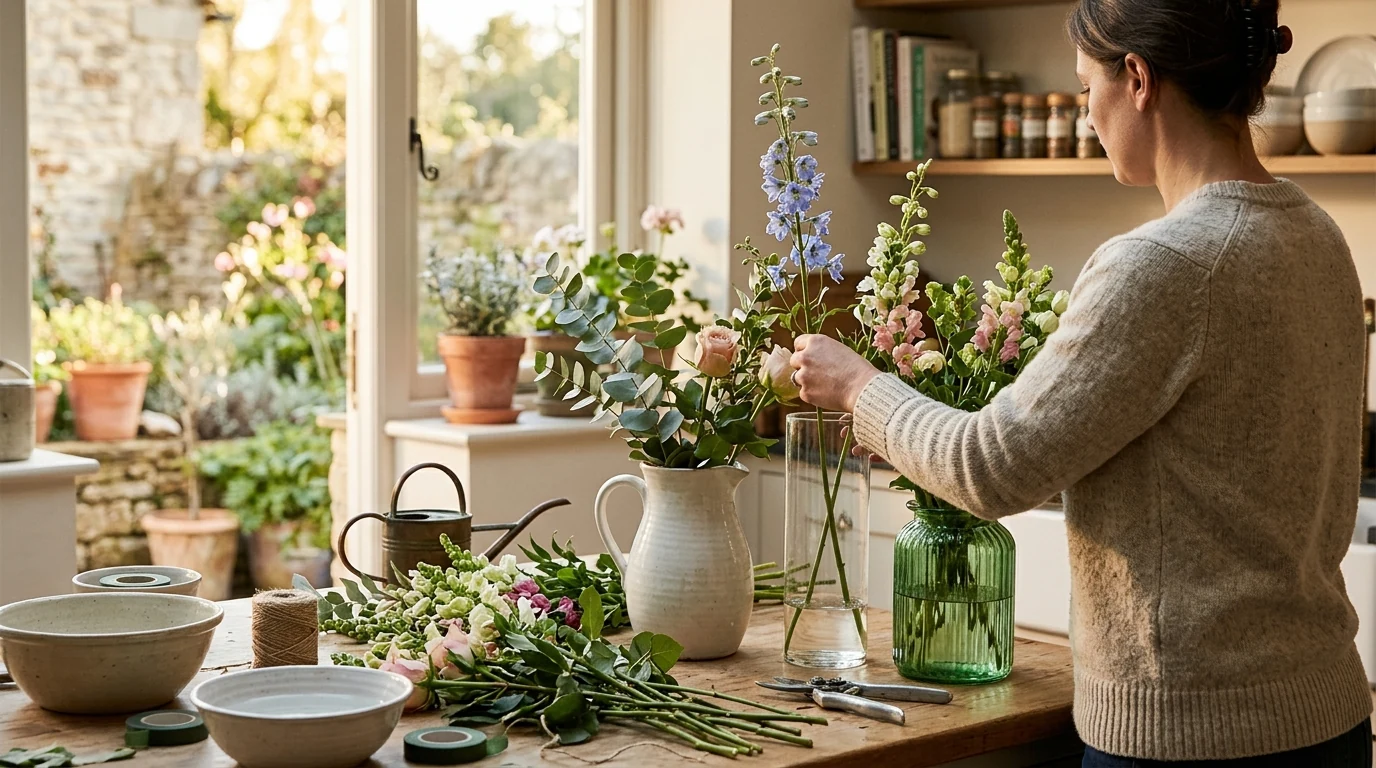
The best vase for flowers is the one that matches your bouquet’s stem type, height, and water needs while keeping the arrangement stable. Our team recommends starting with shape and material, then choosing the right size for the flowers you bring home most often.
Cylinders are a go-to for tulips, roses, sunflowers, and mixed grocery bouquets because the straight sides keep stems upright and easy to arrange. Trumpet or flared vases help open-faced blooms (like peonies and garden roses) spread naturally without crowding. For looser, modern arrangements, wide-mouth bowls work well, especially when you use fewer stems and let them arc.
For delicate or top-heavy flowers, bud vases and narrow-neck bottles reduce wobble by constraining the stems. This is ideal for single dahlias, ranunculus, or a few sprigs of wildflower-style stems.
Ceramic and porcelain vases are excellent for everyday flowers because they’re sturdy, hide water lines, and add visual weight that balances full bouquets. Glass is perfect when you like a clean, fresh look and want to monitor water clarity, but it shows stems and residue more easily. Metal vases can be striking for dried stems, but for fresh flowers choose ones with a sealed interior to prevent corrosion and leaks.
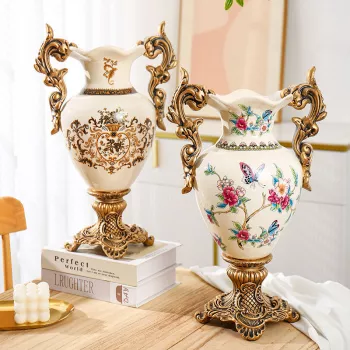
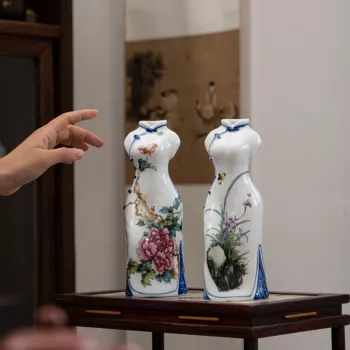
If you love a vintage accent, explore our styling tips in our guide to retro Chinese ceramic vase decor: https://rareselectionsspot.shop/guide-retro-chinese-ceramic-vase-decor-styling-ideas/.
A simple rule: aim for a vase height that’s about one-third to one-half of the total arrangement height. Give thick stems (hydrangea, lilac) a wider opening, and give thin stems (tulips, anemones) a narrower neck to prevent splaying. For most mixed bouquets, a medium cylinder with enough depth to submerge 3–5 inches of stem is the most forgiving choice.
Use a narrower-neck vase or create a simple tape grid across the opening to support stems. Keeping the waterline lower for softer stems and trimming stems at an angle also improves stability.








Leave a comment