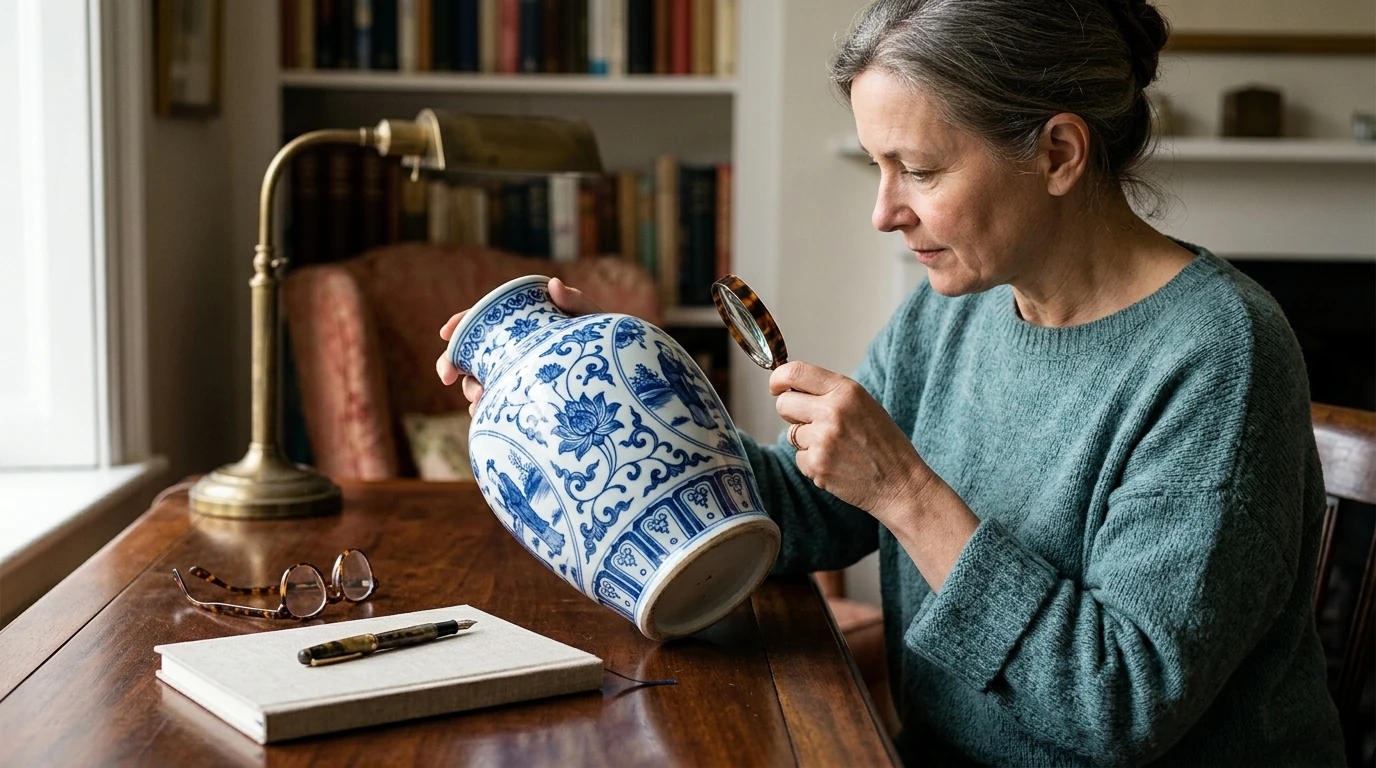
Value usually comes from a mix of age, authenticity, maker, condition, and market demand. Our team uses a quick, repeatable checklist: look for identifying marks, confirm the body and glaze quality, evaluate decoration and form, then assess condition and provenance. If several high-value signals stack up, it’s worth getting a professional appraisal before you clean, repair, or sell it.
Turn the vase over and examine any reign mark, studio mark, or impressed seal. Crisp, well-centered marks can be meaningful, but a mark alone doesn’t guarantee age. Check the foot rim: older pieces often show natural wear, small grit marks, or firing quirks, while very sharp edges and perfectly uniform “aging” can be a red flag.
Porcelain tends to feel dense and ring lightly when tapped with a fingernail, while earthenware is more porous and heavier for its size. Look closely at glaze: high-quality glaze is even and glassy, pooling subtly around details and edges. Hand-painted decoration typically shows brush variation and layered pigment, while mass decoration may look overly uniform.
Complex motifs (dragons, phoenix, scholars, landscapes) and well-balanced composition can add value, especially when the palette and style align with known periods. Unusual shapes, matched pairs, large sizes, or rare techniques (famille rose/enamel work, underglaze blue with fine linework, carved or molded relief) can also raise desirability.
Inspect for hairline cracks, rim chips, repairs, or repainting. Repairs aren’t always a deal-breaker for decorative use, but collectors typically pay significantly less for restored pieces. Also watch for “invisible” damage: tap gently around the rim and body; dull spots can hint at cracks.
Record height, diameter, weight, mark text, and any distinguishing features. Then compare to sold results (not asking prices) and consider an independent appraiser for higher-end candidates. If you’re styling or collecting, you may also enjoy our guide on display and décor ideas: Retro Chinese Ceramic Vase Decor Styling Ideas.
Stabilize it by keeping the vase dry and avoiding handling on the damaged edge. Don’t sand or paint the chip; leave it as-is until you decide whether professional conservation is worthwhile, since amateur touch-ups can reduce value.









Leave a comment