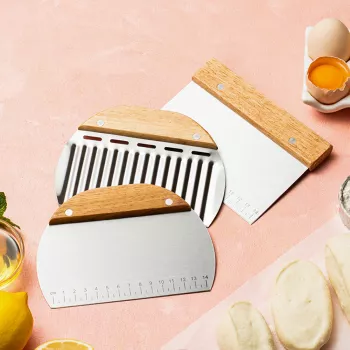
Some kitchen tools earn their spot because they save time every single bake. This stainless steel wavy dough cutter with an oak handle is one of those: it portions dough neatly, lifts and transfers with control, scrapes benches clean, and adds a classic crimped edge for pastry and pasta work—all while feeling steady in the hand. When you’re moving between mixing, shaping, and baking, having one tool that handles “cut, scrape, and move” makes the whole process calmer and more consistent.
If you’ve ever tried to portion sticky dough with a knife and ended up stretching it out of shape, you’ll appreciate how a purpose-built cutter helps you keep edges defined and portions uniform.
In day-to-day baking, this combination matters most when you’re working fast: the metal does the clean separating, and the handle gives you confident pressure and direction—particularly when you’re scraping a floured bench back into a neat working zone.
Our team also likes it as a “boundary tool” when organizing the workspace: scrape loose flour into a small pile, move it aside, and keep your main rolling area clean so your dough doesn’t dry out from excess dusting.
One small habit that makes a big difference: after each cut, lift straight up before repositioning. Sliding the blade sideways is what tends to tug edges and distort a crisp wave. For laminated dough, decisive pressure preserves those visible layers you worked hard to build.
For sanitation and good kitchen habits—especially when you move between raw ingredients and baked goods—follow clear cleaning routines like those outlined by the USDA Food Safety and Inspection Service. And if you want a deeper technique refresh on dough handling and pastry basics, King Arthur Baking’s Baking School resources are a solid reference.
| After Baking | What to Do | Why It Helps |
|---|---|---|
| Right away | Rinse off dough and flour; wash with mild soap | Prevents dried-on residue that’s harder to remove |
| After washing | Dry fully (blade + handle junction) | Reduces spotting on metal and protects the handle finish |
| Weekly | Check the handle for dryness; wipe with a food-safe oil if needed | Helps maintain a smooth, comfortable grip over time |
| Storage | Keep edge protected and separated from heavy tools | Maintains a clean cutting profile and avoids nicks |
Yes. Use the flat edge to scrape and gather dough and flour from the counter; the handle improves grip and keeps your hands clear of the surface.
Chill soft dough briefly, dust the blade lightly if needed, then press straight down in one confident motion rather than sawing. Lifting straight up between cuts helps keep the edge crisp.
It’s best on sturdy surfaces like wood or sturdy boards. Use extra care on delicate or easily scratched countertops and avoid aggressive scraping.








Leave a comment