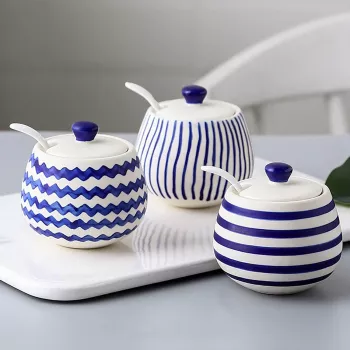
A seasoning station should make cooking easier and keep your countertop looking intentional. Our striped ceramic seasoning jar with spoon brings a clean, hand-painted look to everyday staples—salt, pepper blends, chili flakes, sugar, or finishing salts—while keeping a dedicated scoop right where it belongs. The result is a simple routine shift: fewer messy pours, faster seasoning, and a setup that looks collected instead of cluttered.
When you cook often, the small frictions add up: hunting for a measuring spoon, wiping spice dust off the counter, or trying to pour “just a little” from a bag. This jar is made for the ingredients you reach for constantly and the pace of real weeknight cooking.
If you’re ready to set up a dedicated seasoning zone, start here: Striped Ceramic Seasoning Jar with Spoon – Hand-Painted Spice & Salt Container.
This style of jar is most helpful for dry ingredients you add by pinch, small scoop, or sprinkle-by-hand. Keep it where the action happens, and you’ll use it constantly.
| What to store | Where it works best | Why the spoon helps |
|---|---|---|
| Kosher salt | By the stove or cutting board | Fast pinches for seasoning at every step |
| Chili flakes / chili crisp topping | Near the cooktop or dining table | Controlled heat without over-pouring |
| Signature spice blend | Next to oils and vinegars | Scoop straight into bowls, marinades, and rubs |
| Sugar / cinnamon sugar | Coffee bar or baking shelf | Cleaner portioning than free-pouring |
| Finishing salt | Serving tray or table setting | Small sprinkles for plated dishes |
A countertop seasoning jar should look like it belongs there—not like one more thing that needs managing. A few simple moves keep the setup calm and practical.
Countertop storage works best when you protect dry ingredients from moisture and residue. The goal is simple: keep flavors clean, textures free-flowing, and the rim neat.
For broader kitchen safety and food-handling best practices, the USDA’s guidance is a solid reference: USDA Food Safety and Inspection Service — Kitchen Companion: Keeping Food Safe. If you’re curious about how the U.S. regulates materials intended to contact food, the FDA overview is helpful: FDA — Food Contact Substances (Overview).
This is the kind of kitchen piece people use immediately—then wonder how they cooked without it.
You can store many dry kitchen staples, including kosher salt, finishing salt, chili flakes, spice mixes, sugar, and loose tea. To keep everything free-flowing and fresh, make sure you only use a dry spoon and avoid exposing the contents to constant steam.
A spoon jar is ideal when you season by pinch or need quick, controlled scoops during cooking, especially near the stove or cutting board. A shaker is convenient for fast sprinkling, so the better choice depends on whether you use the ingredient for pinches/scoops or for shake-on finishing.
Prevent clumping by keeping the spoon dry, placing the jar away from frequent steam, and wiping the rim so residue doesn’t attract moisture. Refilling smaller amounts and keeping backup supply in the pantry also helps maintain a dry, free-flowing texture.








Leave a comment