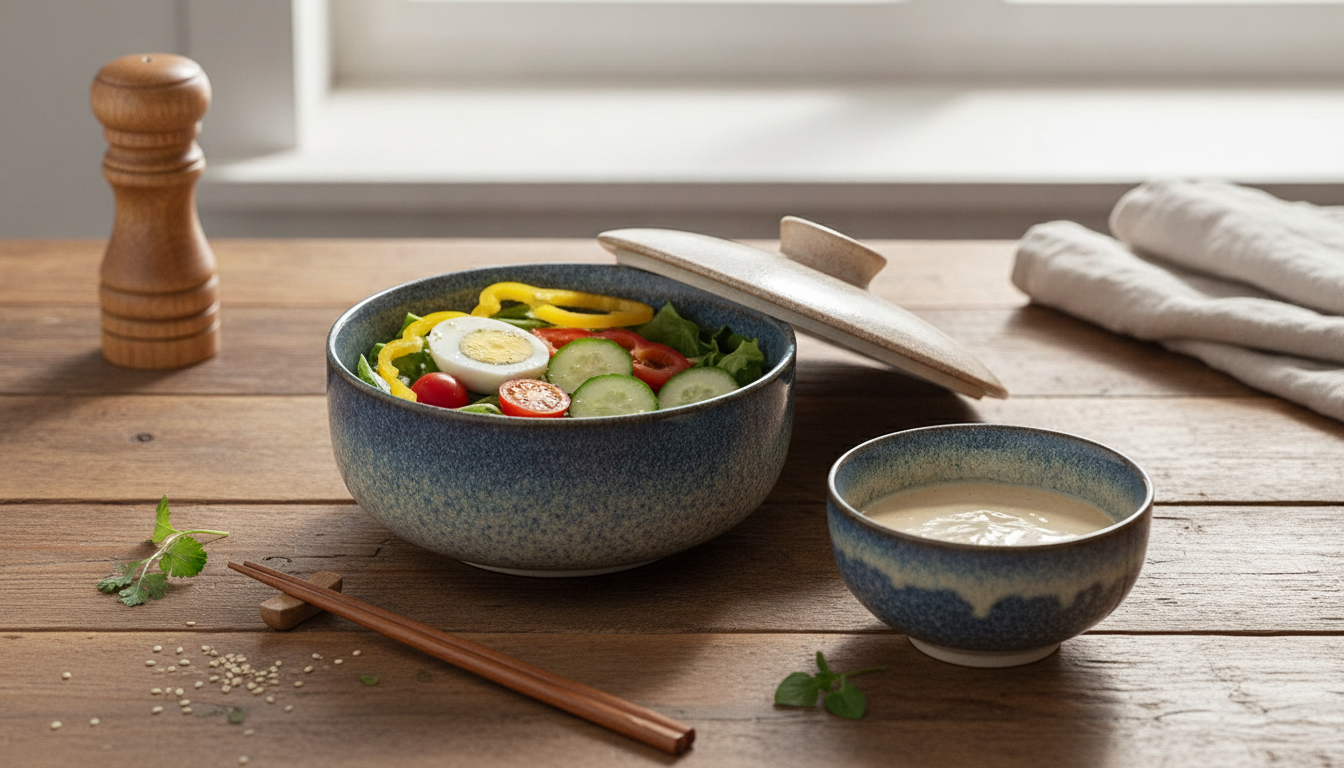
A lidded ceramic salad bowl keeps greens crisp, makes serving feel intentional, and simplifies storing leftovers without swapping containers. This piece leans on Japanese-inspired simplicity—clean lines, satisfying weight, and a lid that helps move from prep to table to fridge with less fuss.
A salad bowl is often treated as “just a mixing bowl,” but adding a well-fitting lid changes how it functions day to day. Instead of juggling plastic wrap or transferring food into a storage container, you can keep one calm, cohesive workflow from start to finish.
For food safety, remember that salads with cooked proteins, dairy-based dressings, or cut produce should be refrigerated promptly and kept cold per guidance from USDA FSIS and the FDA.
Japanese-inspired tableware tends to look effortless rather than flashy. A ceramic bowl with subtle curves and a thoughtful lid feels composed—whether it’s holding a simple green salad or acting as the centerpiece of a weeknight spread.
If you like hosting, the lid quietly does a lot of work: it keeps the bowl looking “finished” while you set the table, grill outside, or wait for everyone to arrive before tossing in delicate herbs.
The best size is the one that prevents two common salad problems: smashed greens and messy spills. Aim for enough room to lift and turn ingredients while tossing, plus a little headspace if you plan to store leftovers without crushing toppings.
| Use | Best Fit | Why the Lid Helps |
|---|---|---|
| Side salad for 1–2 | Medium bowl | Keeps greens fresh until plating |
| Family salad | Large bowl | Covers between rounds of serving |
| Fruit or cut veg | Medium bowl | Reduces odor transfer in the fridge |
| Cold noodles / grain bowls | Medium to large bowl | Prevents drying while chilling |
A lidded ceramic bowl shines when you treat it like a “prep-and-hold” vessel: build the salad in stages, keep it protected, then serve when it makes sense for your meal timing.
A simple rhythm that works for busy evenings: rinse greens earlier in the day, dry thoroughly, and hold them covered in the fridge. When dinner is nearly ready, add mix-ins, dress lightly, toss, and bring the same bowl to the table.
Ceramic is sturdy, but it rewards a little care—especially when there’s a fitted lid involved. Small habits help prevent chips, scuffs, and temperature-related stress.
If you’re looking for a single piece that handles prep, serving, and storage with a cohesive look, the Japanese-Style Ceramic Salad Bowl with Lid is designed to do exactly that. It’s especially handy for meal prep, leftovers, and keeping salads protected before serving.
| Item | Detail |
|---|---|
| Name | Japanese-Style Ceramic Salad Bowl with Lid |
| Price | 35.51 USD |
| Availability | In stock |
| Product page | View product |
If your “salad night” often turns into lingering at the table (or walking plates out to the patio), comfortable footwear can be a small upgrade that makes hosting feel easier. For an at-home option, see Furla Women’s Black Leather Slippers.
Yes—ceramic is well-suited for chilling. Let hot food cool before covering and refrigerating, and avoid sudden temperature swings that can stress the material.
Undressed salad stays crisper longer, so storing dressing separately is ideal. If you need to dress ahead, use a lighter hand and add delicate greens and crunchy toppings right before serving.
Dry greens thoroughly, cool warm ingredients before covering, and leave a little headspace in the bowl. For short storage, placing a small sheet of parchment or a paper towel on top can help absorb surface moisture before you close the lid.








Leave a comment