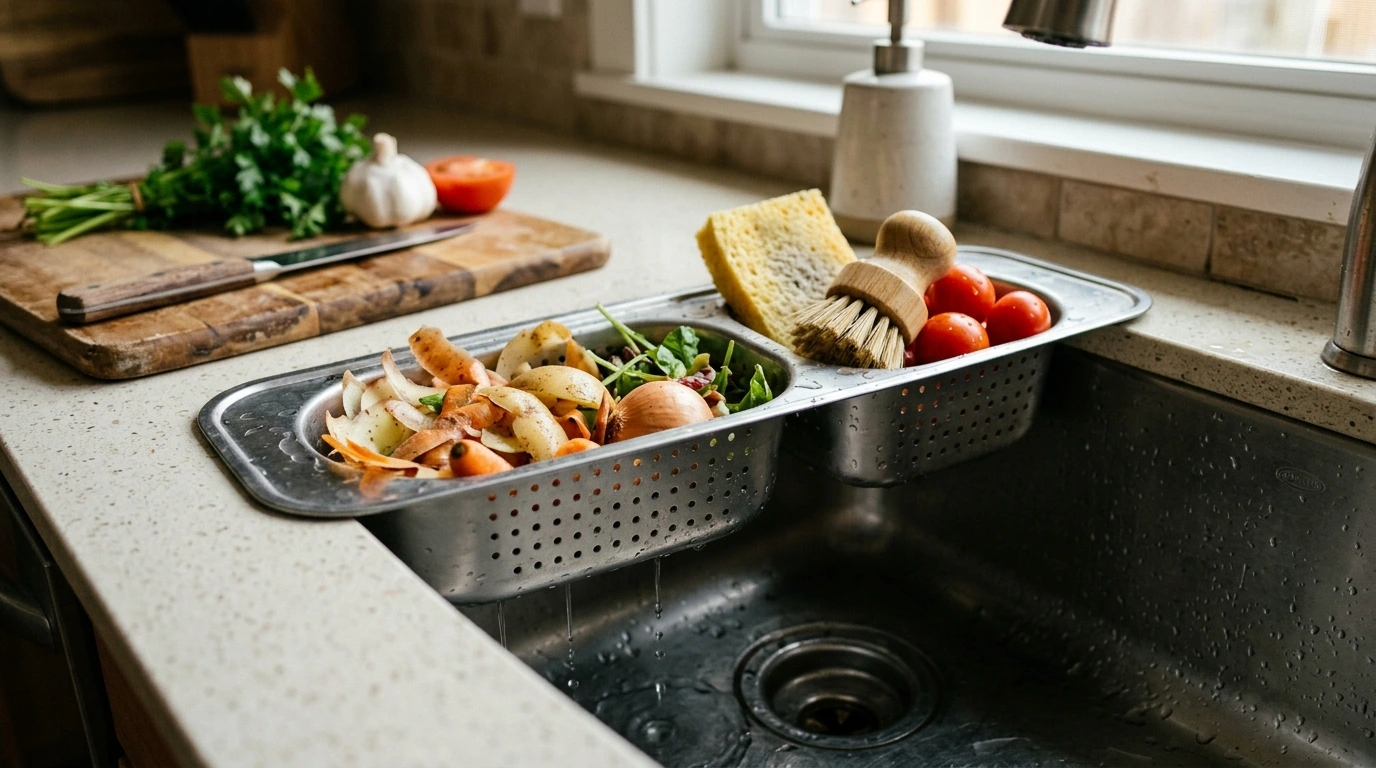
A busy sink turns into a bottleneck fast: scraps collect near the drain, sponges stay soggy, and rinsed produce has nowhere to drip. Our multifunction kitchen sink filter basket with dry-wet separation and a drain rack is a small add-on that brings order back to daily prep and cleanup—catching debris before it clogs pipes while giving wet items a place to drain neatly at the sink.
If your sink area feels messy even right after you “clean,” the problem is usually workflow. This basket is built to make the sink behave more like a station—with a designated place for scraps, drip-dry items, and frequently used tools.
One of the most frustrating parts of sink clutter is mixing wet and dry tasks in the same space. Dry-wet separation is simply a habit: wet items drip where they belong, and dry tools stop living in puddles.
Once you have a dedicated spot at the sink, you’ll start using it for all the little nuisances that slow you down.
A sink organizer works best when it’s easy to keep clean. A few quick habits do more than occasional deep-clean marathons.
For broader best practices, the USDA’s food-safety guidance is a solid reference for kitchen hygiene fundamentals, including preventing cross-contamination: https://www.usda.gov/food-safety. And for a reminder on what should never go down your drain (especially fats, oils, and grease), the EPA is a helpful authority: https://www.epa.gov/hw.
| Sink situation | What usually happens | What the basket changes |
|---|---|---|
| Peels and scraps during prep | Scraps scatter into the basin and drift toward the drain | Scraps collect in one lift-out spot for quick disposal |
| Wet sponge left on counter edge | Puddles and drips spread across the counter | Drips return to the sink; tools have a dedicated place |
| Rinsed small tools/parts | Items end up at the bottom of the sink or get misplaced | Small items drain neatly while staying visible and contained |
| Slow drain from recurring debris | Residue builds up over time near the drain | More debris is intercepted before it can travel into the plumbing |
If you’re ready to tighten up your sink workflow, our team recommends starting here: Multifunction Kitchen Sink Filter Basket with Dry-Wet Separation & Drain Rack.
Yes—use it as a scraps catch during prep, empty it promptly, give it a quick rinse, and then use it as a drain spot for sponges or brushes. Keeping the routine “collect, discard, rinse” helps it stay cleaner and more pleasant to use day to day.
Empty it after each prep session when possible, or at least once daily if you cook regularly. A quick rinse after use is usually enough, with a deeper clean as needed based on what you collect (especially oily or sticky scraps).
It can help by catching solid food bits before they enter your drain, which reduces the amount of debris that can accumulate in plumbing over time. It’s still important to keep grease and oils out of the sink and dispose of them properly.










Leave a comment