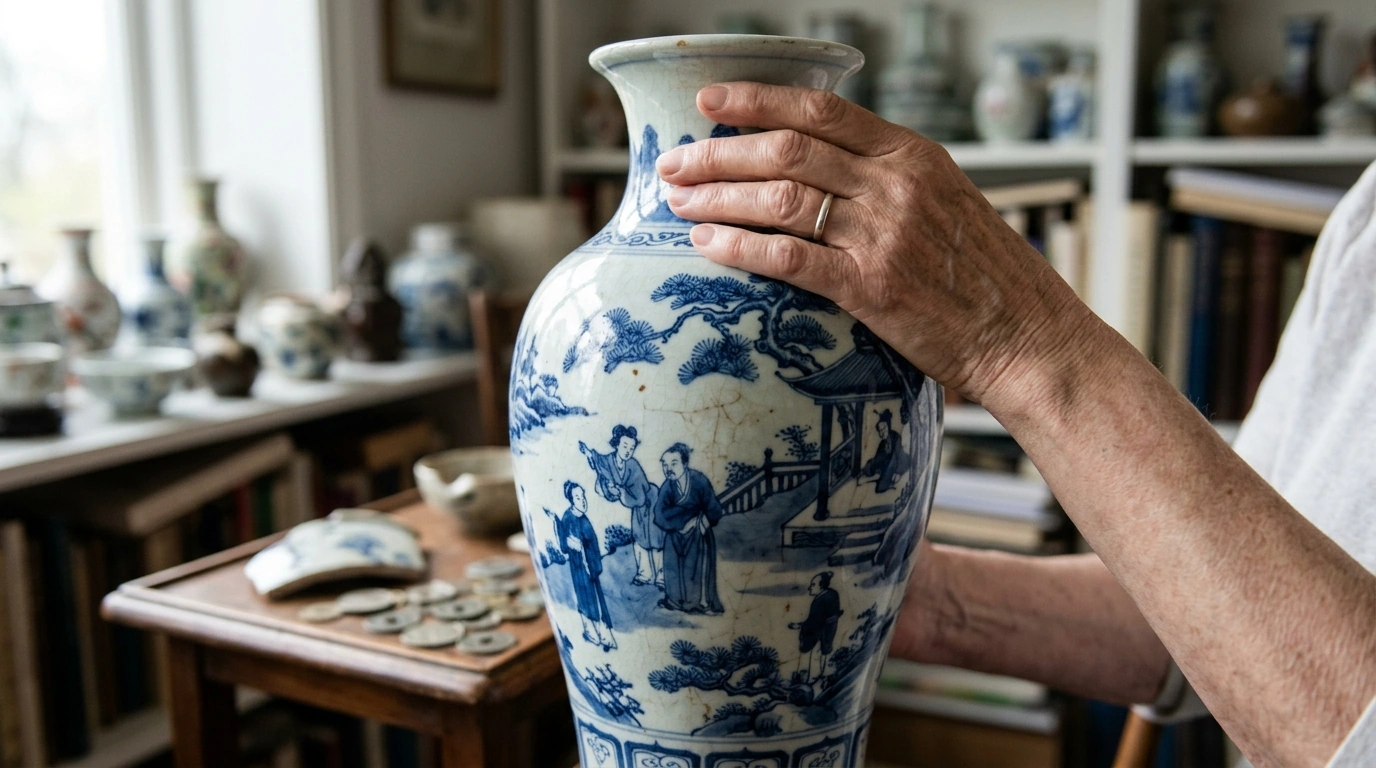
Value in Chinese vases comes from a mix of age, rarity, craftsmanship, condition, and how confidently the piece can be attributed to a period, kiln, or workshop. Our team looks at the vase as a whole object—form, glaze, painting, foot, and wear—because one standout feature rarely carries the entire valuation.
Age with consistent workmanship: Older doesn’t automatically mean valuable, but earlier pieces with strong potting, balanced proportions, and crisp decoration tend to command higher prices. Forms that “sit right” (stable foot, intentional neck, harmonious shoulders) are often a good sign.
High-quality glazes and enamels: Look for depth and clarity rather than flat color. Classic valuable categories include luminous monochromes, well-controlled celadon tones, and finely layered underglaze blue. With famille rose or famille verte palettes, valuable examples show clean linework and confident shading rather than muddy overpainting.
Decoration that matches the body: On better vases, painting follows the curve of the vessel naturally and key motifs are thoughtfully placed. Borders, diaper patterns, and repeating bands should be even and purposeful—not rushed or unevenly spaced.
Foot and base details: The footring and base often reveal quality. Neat trimming, a well-finished foot, and an appropriate glaze stop can indicate skilled production. Marks can help, but they must align with the vase’s material, wear, and overall style.
Imperial-style forms and refined monochromes: Bottleneck, baluster, meiping, and gu shapes in rich monochrome glazes (or carefully executed crackle effects) can be especially desirable when the surface is even and the silhouette is crisp.
Export and mid-century pieces with exceptional artistry: Some 19th–20th century vases rise in value when they show unusually fine painting, rare shapes, or limited production traits, even if they aren’t extremely old.
Chips on the rim, hairlines, restored breaks, heavy crazing stains, or drilled bases typically reduce value. Light, honest wear is normal for older ceramics, but structural damage and obvious restoration are priced into the piece immediately.
For ideas on how Chinese ceramics can live beautifully in your space once you’ve chosen the right piece, see our guide: retro Chinese ceramic vase decor & styling ideas.
Compare the foot, glaze texture, and decoration quality: antiques often show consistent, natural wear and confident craftsmanship, while reproductions may have artificially applied “aging” or less cohesive painting. A reproduction can still be collectible, but it’s valued differently than an earlier-period piece.









Leave a comment