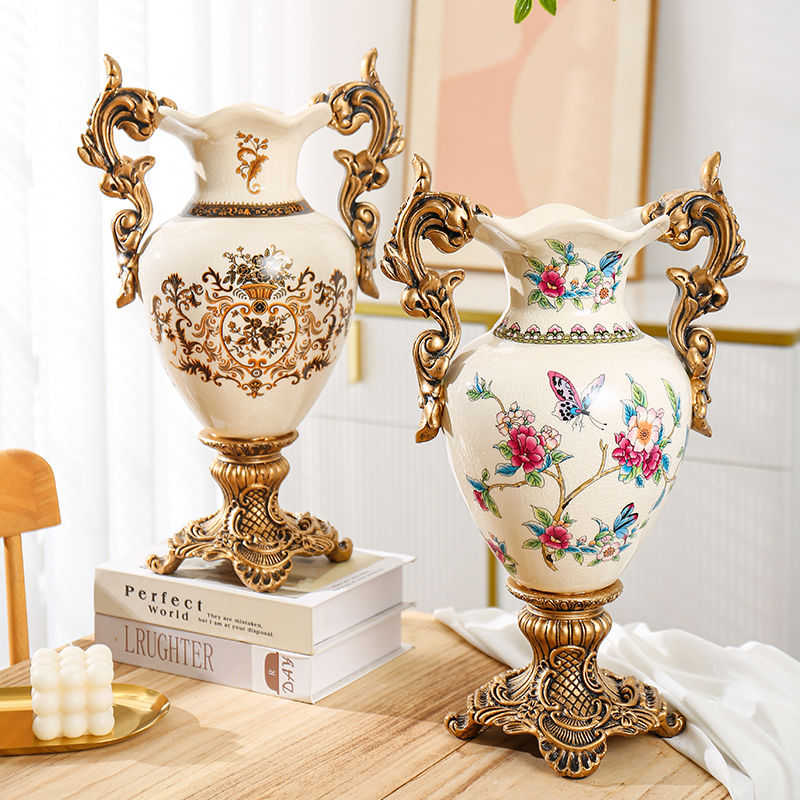
When you’re holding a Chinese vase in your hands, the quickest path to identification is a calm, methodical check of materials, decoration, construction, and marks. Our team uses the same checklist whether you’re shopping for a decorative accent or trying to understand what’s already on your shelf.
Porcelain is typically hard, dense, and refined, with a smoother feel and cleaner ring when lightly tapped. Stoneware tends to be heavier with a more robust, slightly granular body. Earthenware is usually softer and more porous, often showing thicker walls and a less crisp edge where the glaze ends.
Look for even coverage, pooling at the foot, and how the glaze breaks on raised decoration. Older pieces can show wear at high points and on the base from handling. Crackle patterns can be intentional (especially in certain traditional styles), so focus on whether the crackling looks uniform and stable rather than random damage.
Hand-painted enamels often show brush variation, slightly uneven lines, and layered color. Transfer or printed designs can look very consistent and may show dot patterns under magnification. Relief work, applied dragons, or molded bands should feel integrated—crude joins or misaligned motifs can indicate later decorative additions.
A neatly finished foot rim with controlled wear often suggests careful production. Look for discoloration from age, kiln grit, or firing marks. A perfectly pristine, glossy base on a piece marketed as old is a mismatch worth noting; similarly, an aggressively sanded base can hide details.
Marks can be painted underglaze blue, stamped, incised, or enamelled. A reign mark may honor an earlier period rather than state the actual age. Use the mark as one clue among many, matching it to the vase’s form, palette, and technique instead of relying on it alone.
For practical styling context and examples of classic forms, visit our guide: https://rareselectionsspot.shop/guide-retro-chinese-ceramic-vase-decor-styling-ideas/.
Porcelain is a type of ceramic fired at higher temperatures, usually making it denser, smoother, and less porous. Many “ceramic” vases are earthenware or stoneware, which can be thicker and more absorbent.








Leave a comment