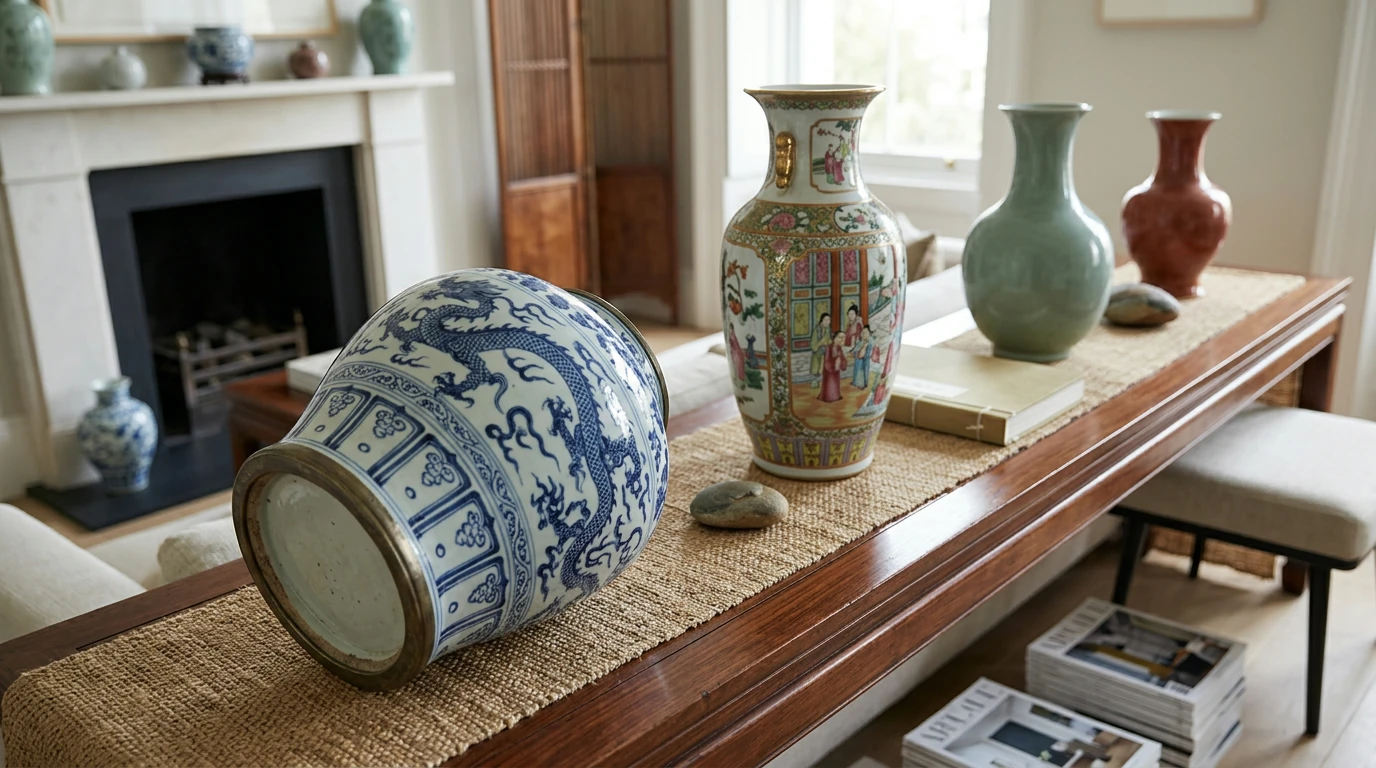
If you’re shopping for an antique Chinese vase with real long-term value, focus on pieces tied to major dynasties, refined kiln traditions, and consistently collected decorative programs. Our team recommends starting with a few categories that remain highly sought after for their history, craftsmanship, and market demand. For ideas on integrating these looks into your space, see our styling guide here: https://rareselectionsspot.shop/guide-retro-chinese-ceramic-vase-decor-styling-ideas/.
Classic cobalt underglaze decoration on well-potted porcelain is one of the most collected Chinese ceramic styles. Earlier, crisp painting, balanced proportions, and natural age wear (not harsh abrasion) tend to support value.
Kangxi-era vases are prized for confident brushwork, luminous glazes, and lively palettes. Look for forms with pleasing symmetry and decoration that wraps cleanly around the body without awkward “dead zones.”
These are known for sophisticated enamels, delicate shading, and complex scenes. Value rises with fine linework, careful color layering, and shapes that feel intentional (not overly thick at the foot or mouth).
High-quality monochrome wares—especially those associated with Song aesthetics—command serious attention for glaze depth and subtle surface character. Even later tributes can be valuable when the glaze is exceptionally well-controlled and the form is elegant.
Fine cloisonné can be a strong value category when the wirework is tight, the surface is smooth, and the colors stay saturated. Check rims, shoulders, and bases closely, since repairs and dents can materially affect worth.
Condition matters, but so does quality of form and decoration. Favor vases with stable bases, clean mouths, and consistent glaze, and avoid pieces with spreading cracks, sticky overpaint, or heavy “antiquing” meant to simulate age.
Place it on a stable, level surface away from traffic paths and swinging doors, and use museum putty or a discreet stand if the base is narrow. Keep it out of direct sunlight and away from heat vents to reduce stress on glazes and enamels.











Leave a comment