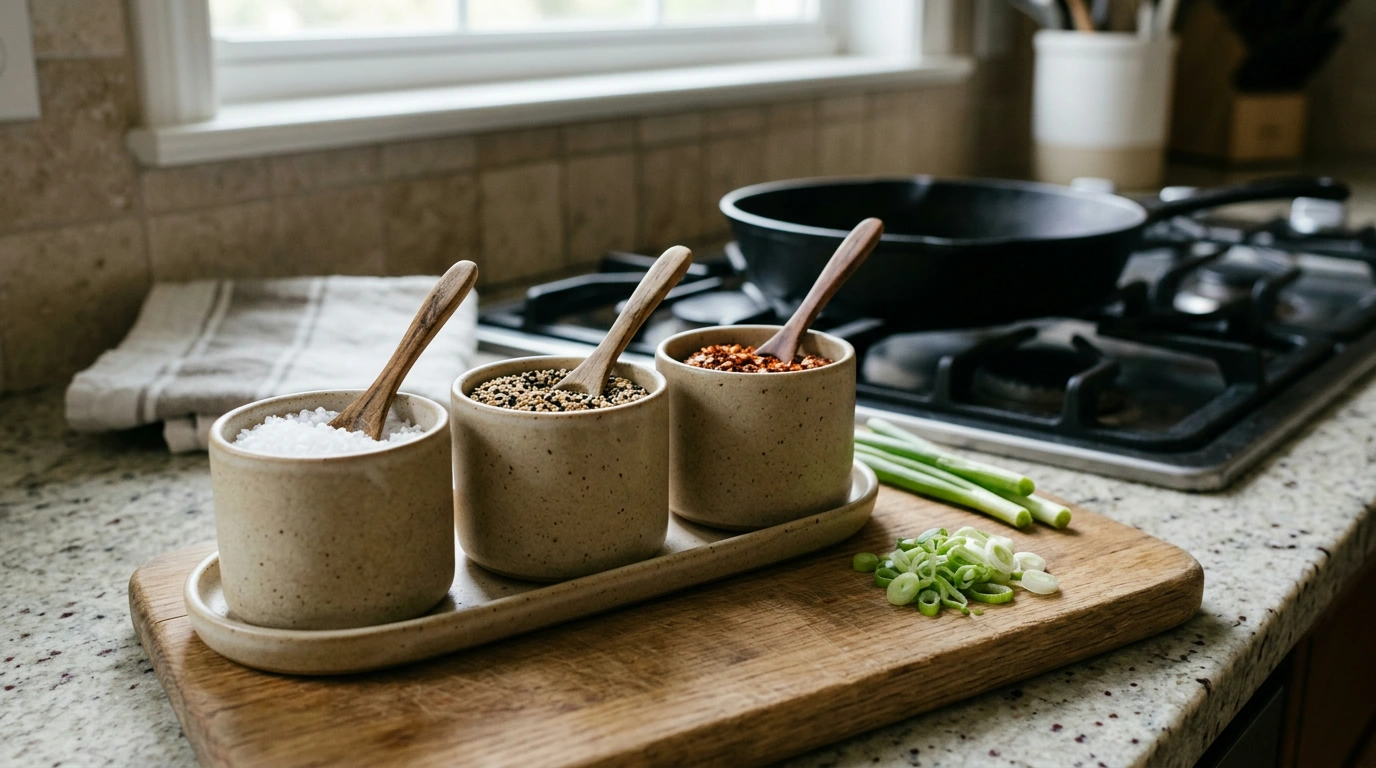
A well-run kitchen feels quieter: less visual clutter, fewer half-open bags, and the right seasoning always within reach. Our ceramic spice jar set brings a Japanese-style, countertop-ready approach to storage—matched jars, a tidy tray, and dedicated spoons—so your everyday cooking stays neat, fast, and consistent.
What this set is designed to solve
Spices tend to spread out over time: a shaker by the stove, a bag by the cutting board, a scoop that disappears into the sink. Our team built this set around the small friction points that slow you down during real cooking.
- Keeps frequently used seasonings visible without looking messy—uniform containers read as intentional, not improvised.
- Reduces the “where did the spoon go?” problem by pairing each jar with a spoon for clean, portioned scoops.
- Creates a single landing spot on the counter (the tray) so jars don’t drift around the stove, sink, and prep area.
- Helps prevent cross-contamination between sweet, savory, and spicy seasonings when each ingredient has its own utensil.
How to use it in a real kitchen (not just for display)
The easiest way to keep a seasoning station useful is to set it up where decisions happen. If you always season at the stove, keep it near the oils. If you season during prep, keep it beside your cutting board.
- Set it up next to the cutting board for prep, or near the stove for finishing and tasting.
- Group by cooking rhythm: everyday basics together (salt, sugar, pepper, chili flakes) rather than alphabetizing.
- Keep powders and crystals separate: use one jar for fine textures (salt, garlic powder) and others for coarse textures (sesame, flaky salt) to avoid clumping and spoon drag.
- Create a “finish station”: reserve one jar for a favorite topper (furikake, toasted sesame, chili crisp crumbs) to elevate bowls, eggs, noodles, and roasted vegetables.
- Make refilling part of a routine: when a jar hits low, refill from pantry stock immediately so the set stays complete and visually calm.
Countertop seasoning station ideas
| Station style |
What to store |
Best placement |
| Daily basics |
Salt, sugar, black pepper, chili flakes |
Between prep space and stove |
| Baking & drinks |
Cinnamon, cocoa, vanilla sugar, matcha mix |
Near mugs, kettle, or baking tools |
| Weeknight savory |
Garlic powder, onion powder, smoked paprika, curry blend |
Closest to stovetop oils |
| Finishing toppers |
Sesame, furikake, flaky salt, chili crunch |
Near plating area |
Why ceramic belongs in seasoning storage
Ceramic earns its place in the everyday kitchen because it feels steady and stays visually calm. It’s the opposite of flimsy packaging that tips, wrinkles, or looks busy when it’s out on the counter.
- A stable, substantial feel: ceramic sits confidently on a counter and looks composed alongside cookware and wooden tools.
- Neutral, kitchen-friendly styling: Japanese-inspired shapes and a tray setup help storage look intentional rather than like packaging transferred to the counter.
- Easy-to-rinse surfaces: ideal for ingredients that leave residue on fingers and spoon handles.
- Temperature resilience for everyday kitchens: comfortable near normal cooking zones (while still keeping any storage away from direct burner heat and steam).
For food storage best practices and general kitchen safety habits, you can also reference guidance like the USDA FoodKeeper App and ingredient overviews from the Harvard T.H. Chan School of Public Health.
Keeping flavors clean: simple care and placement habits
A seasoning station stays “calm” when moisture and residue stay out of the jars. These small habits keep flavors cleaner and textures better (especially for salt, sugar, and fine powders).
- Store away from steam: place the tray slightly back from boiling pots and kettles to reduce moisture exposure.
- Use dry utensils only: if a spoon gets wet, rinse and dry it fully before returning it to the jar.
- Label discreetly if needed: a small underside label or minimal marker on the base keeps the top surface uncluttered.
- Refill smartly: pour pantry spices into a small bowl first, then funnel into the jar to avoid spills on the tray.
- Clean the tray weekly: a quick wipe keeps the whole station feeling fresh, especially if sugar or salt granules scatter.
Where this set shines (and who it’s for)
A simple setup checklist before the first fill
Shop our team’s picks (in stock)
FAQ
What seasonings work best in a countertop ceramic spice jar set?
Everyday staples you reach for constantly work best—think salt, sugar, pepper, and a favorite heat or blend. Keep fine powders in their own jar and coarser toppings (like sesame or flaky salt) separate to reduce clumping and make scooping cleaner. Place the set away from steam so moisture doesn’t affect texture.
How do I keep spices from clumping when using spoons?
Use only dry spoons and keep the tray back from boiling pots or kettles where steam can drift into the jars. If a spoon gets wet, dry it fully before it goes back in. A quick weekly wipe of the tray and jar rims helps prevent sticky buildup that can attract moisture.
Is this better on the counter or inside a cabinet?
Keep it on the counter if you cook with those seasonings daily and want faster, more consistent seasoning. Choose a cabinet if your kitchen runs hot or steamy near the stove, or if you prefer a fully clear countertop; the tray still keeps everything grouped and easy to pull out as one station.
Recommended for you








Leave a comment